Research
We develop new brain imaging and brain stimulation technologies to understand how the human brain works during everyday behavior.
Our research combines recordings and stimulation of brain activity with wearable sensors and immersive virtual reality to study how people learn, remember, navigate, and experience emotions. Many of our studies involve volunteers with implanted brain electrodes who participate in research while moving freely through real and virtual environments. Our goal is to connect discoveries about how the brain works with new treatments for neurological and psychiatric disorders. Our research spans basic neuroscience to clinical studies, including a clinical trial using responsive neurostimulation to treat severe post-traumatic stress disorder (PTSD).


Neural Signatures of Fear and Anxiety
This project uses NeuroMotion Lab technology to study how the human brain learns and retrieves fear-related memories, combining intracranial electrophysiology with multimodal tracking to inform targeted neurostimulation therapies for PTSD.
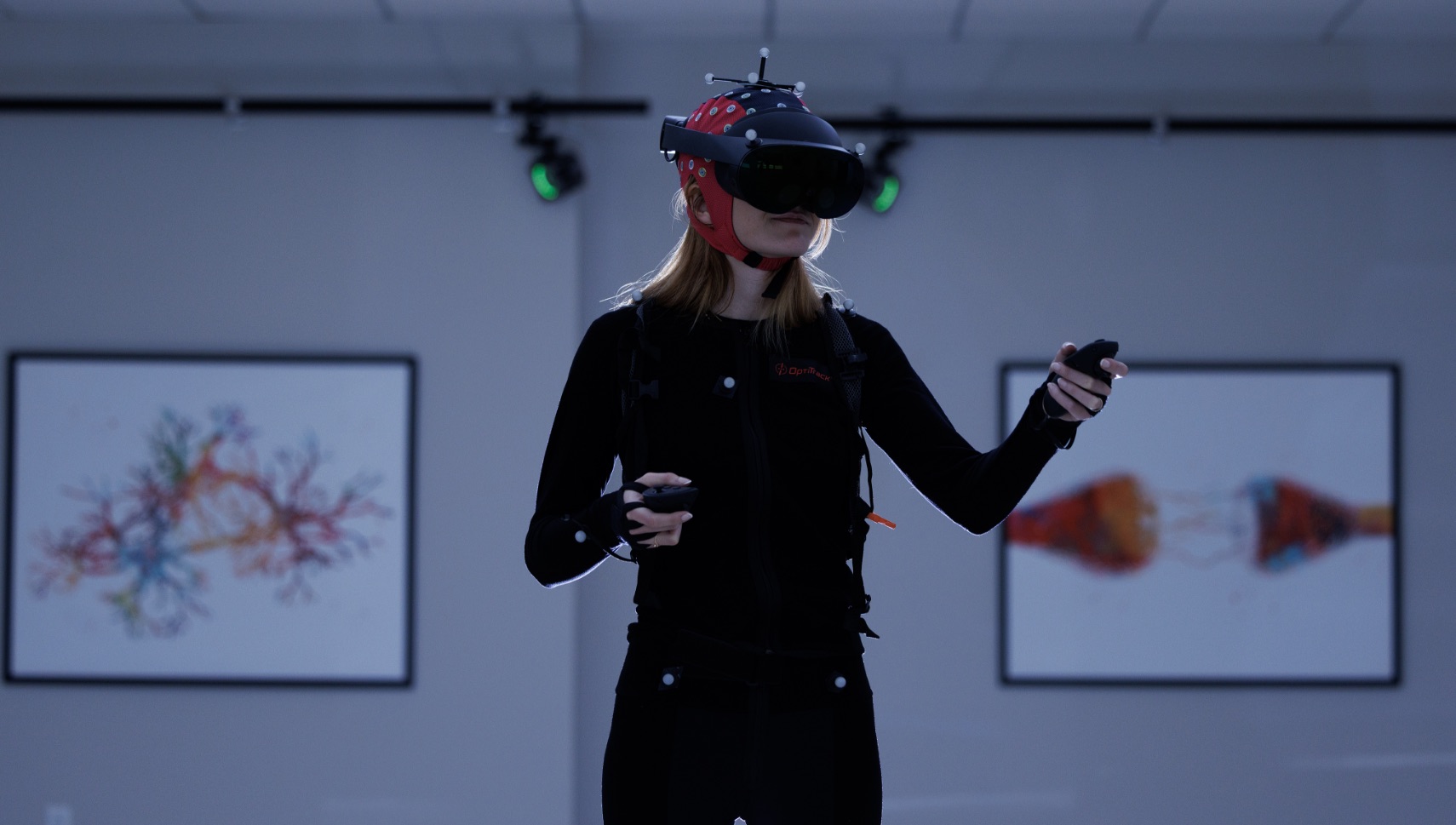
NeuroMotion Lab
Our NeuroMotion Lab is a first-of-its-kind system that combines implanted brain electrodes with motion capture, eye tracking, EEG, and immersive VR/AR to study how the brain works during real-world movement and behavior.
How We Read and Rewire the Brain
Intracranial Single-Unit and EEG Recordings
Patients undergoing neurosurgical evaluation or treatment for epilepsy sometimes have electrodes temporarily implanted in their brains. With their consent, we record from these electrodes while they participate in research tasks, capturing the activity of individual neurons and intracranial EEG in regions critical to memory and navigation, including the hippocampus, entorhinal cortex, amygdala, and prefrontal cortex. These recordings provide a rare, direct window into how the human brain processes experience at the cellular level.
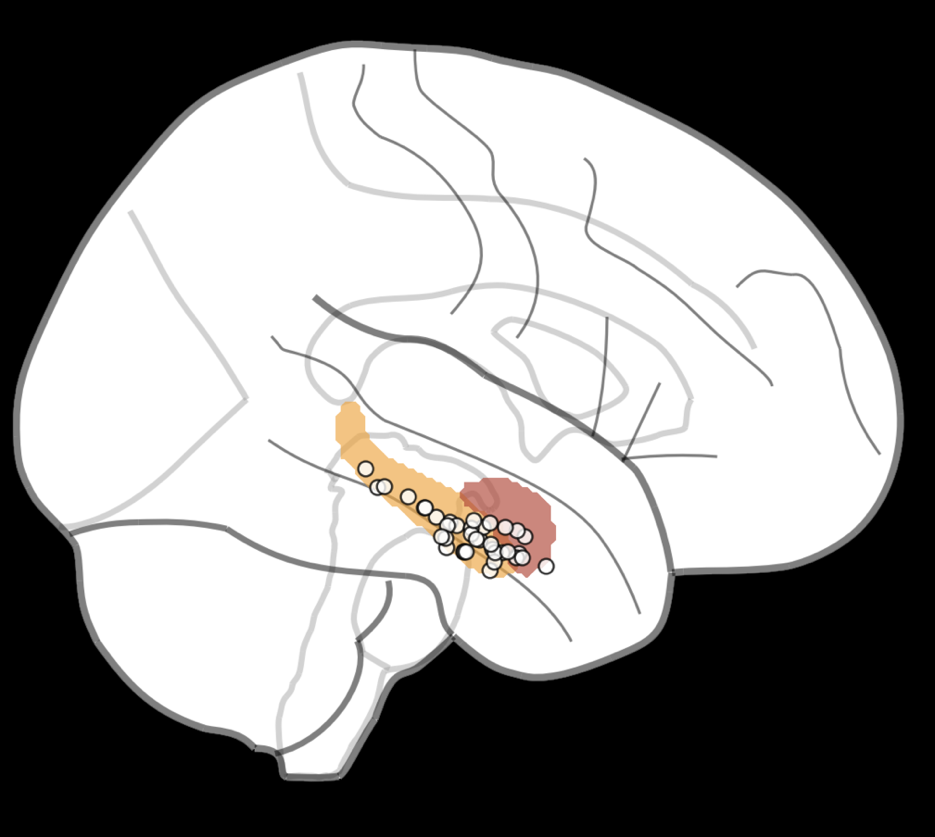
Responsive Neurostimulation (RNS)
Responsive Neurostimulation uses implanted electrodes to deliver precise electrical pulses to targeted brain structures. A small device, similar to a cardiac pacemaker, is placed under the skin in the chest or cranium and connected by thin wires to electrodes in the brain to control stimulation. RNS is FDA-approved for conditions including epilepsy, and clinical trials are now testing its potential for PTSD, depression, OCD, and others. In our lab, RNS serves a dual role as a research tool for understanding how targeted stimulation affects brain circuits, and as an investigational therapy in our PTSD clinical trial.